
Vintage legend
Wilt Chamberlain Card Profile
BCI Collector Score
8.4/10
Blue Chip
Score breakdown
Scores /10 · Weights %
- Basketball achievements and the player's lasting appeal to collectors.25% weight
- 9.5
- The strength of the player's defining rookies, inserts, autographs and patch cards.20% weight
- 7.7
- How consistently collectors buy the player's important cards, supported by repeat sales.20% weight
- 8.5
- How well key cards stand apart as new releases and more parallels add supply. Higher means less risk of dilution.15% weight
- 9.5
- How easy it is to find comparable sales and buyers across different budgets.10% weight
- 7.4
- How much room today's prices leave for the player's long-term case to improve. Higher means less future success is already priced in.10% weight
- 6.5
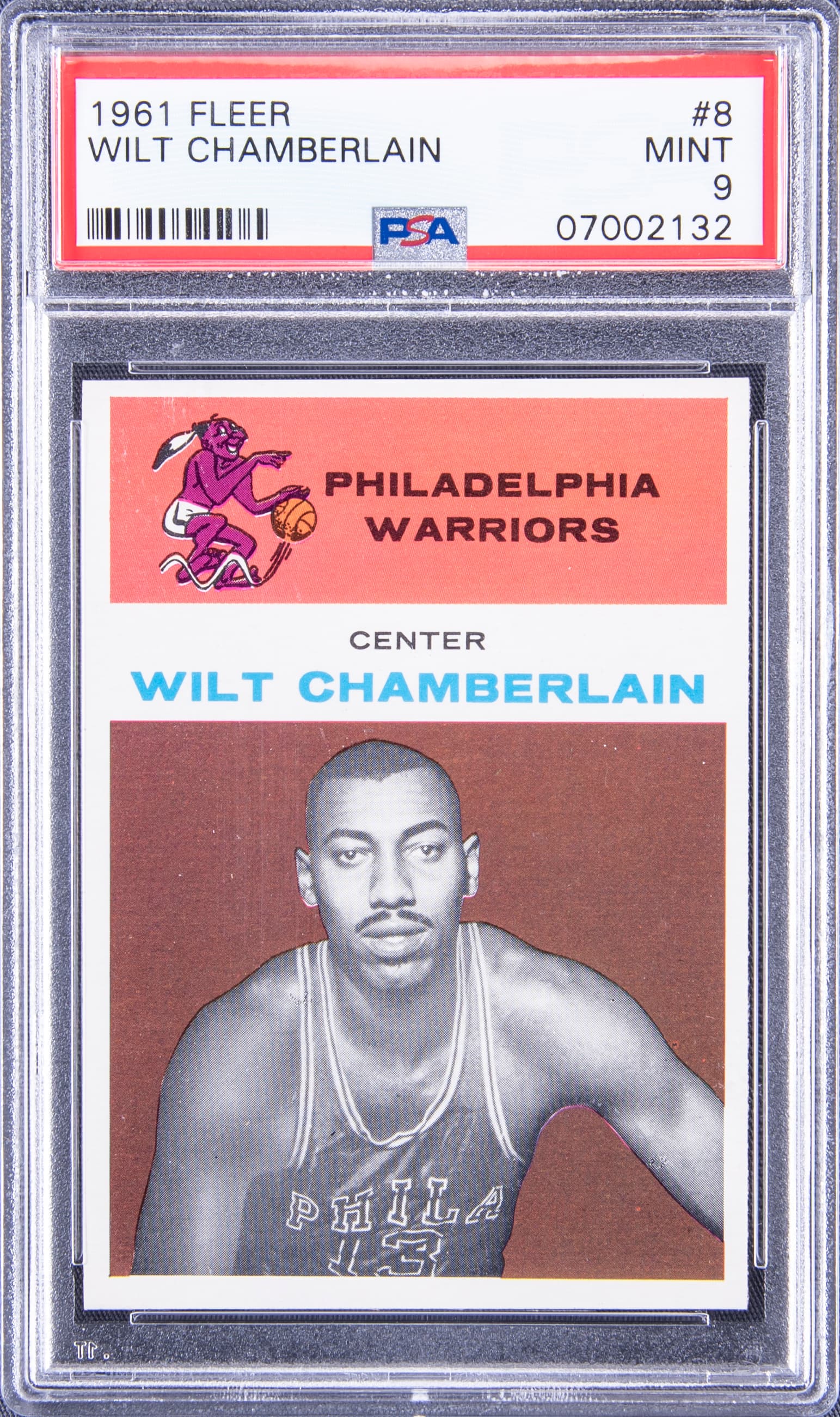
1961 Fleer cornerstone with extreme condition scarcity
Wilt's card market is narrow, but the narrowness is the point. The 1961 Fleer rookie is one of basketball's foundational vintage cards, and the best copies behave less like normal inventory and more like historical artifacts.
Buy lanes
Cards to consider
A card to consider at each budget. Grade, condition and the individual copy affect what you pay.
Entry Lane$500 and below1969-70 Topps Wilt Chamberlain #1
1969-70 Topps Wilt Chamberlain #1
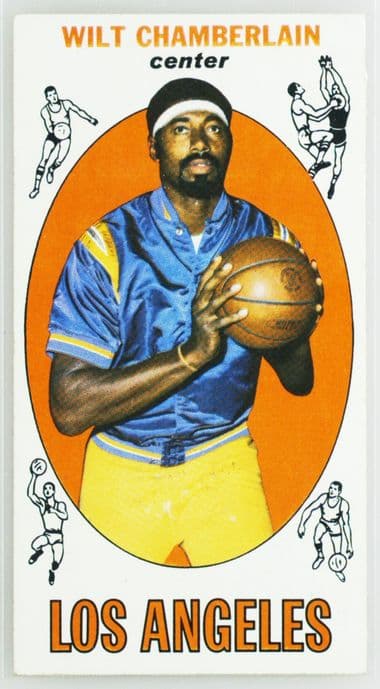
Shown copy: 1969-70 Topps Wilt Chamberlain #1
Evaluate 1969-70 Topps Wilt Chamberlain #1 as the specific Entry Lane card for Wilt Chamberlain. Compare only like-for-like sales and keep grade secondary to the importance of the issue itself.
Buying caution
Do not force a 1961 Fleer #8 into this budget. At this price, a rookie is usually severely compromised, suspicious, or a card you will immediately want to upgrade.
Core Lane$500 to $2,5001961-62 Fleer Wilt Chamberlain In Action #47
1961-62 Fleer Wilt Chamberlain In Action #47
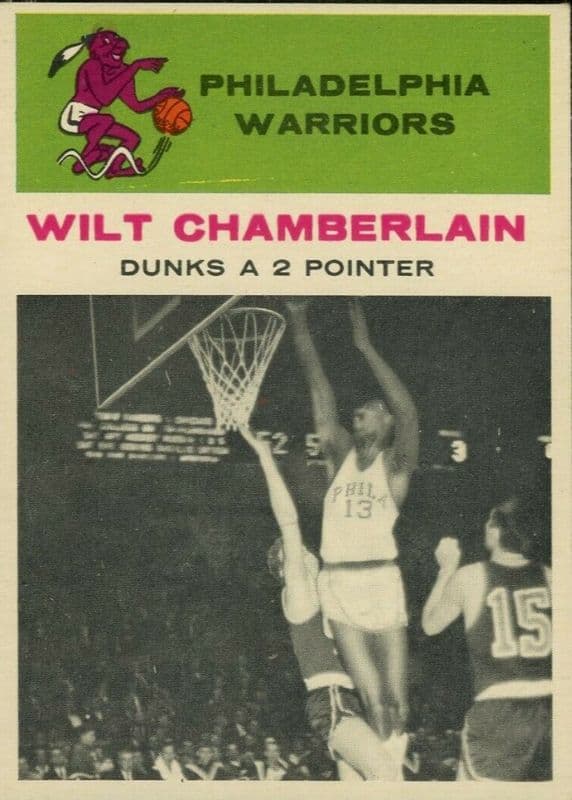
Shown copy: 1961-62 Fleer Wilt Chamberlain In Action #47
Use 1961-62 Fleer Wilt Chamberlain In Action #47 for Wilt Chamberlain's Core Lane. Confirm the exact issue and copy quality, then compare repeatable sales before committing capital.
Buying caution
The In Action card is important, but it is not Wilt's true rookie. Pay for it as the best companion lane, not as a discounted version of the #8 base rookie.
Premium Lane$2,500 to $10,0001961-62 Fleer Wilt Chamberlain Rookie #8
1961-62 Fleer Wilt Chamberlain Rookie #8
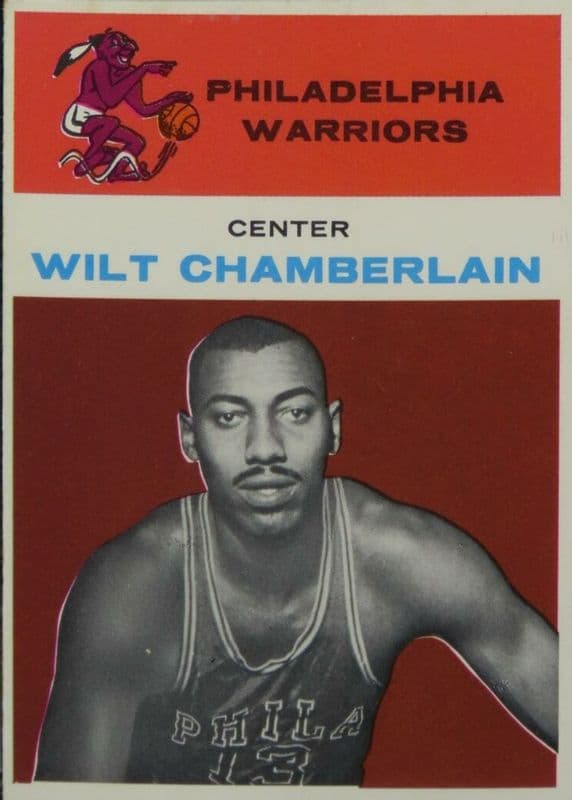
Shown copy: 1961-62 Fleer Wilt Chamberlain Rookie #8
The card to evaluate for Wilt Chamberlain's Premium Lane is 1961-62 Fleer Wilt Chamberlain Rookie #8. Keep the decision tied to exact-card demand, condition, provenance, and price discipline.
Buying caution
Avoid qualifiers, trimmed/min-size concerns, restored raw copies, and copies priced like the next grade up. Wilt's rookie is liquid, but ugly premium copies can sit.
Grail Lane$10,000 to $50,000Signed 1961-62 Fleer Wilt Chamberlain In Action #47
Signed 1961-62 Fleer Wilt Chamberlain In Action #47
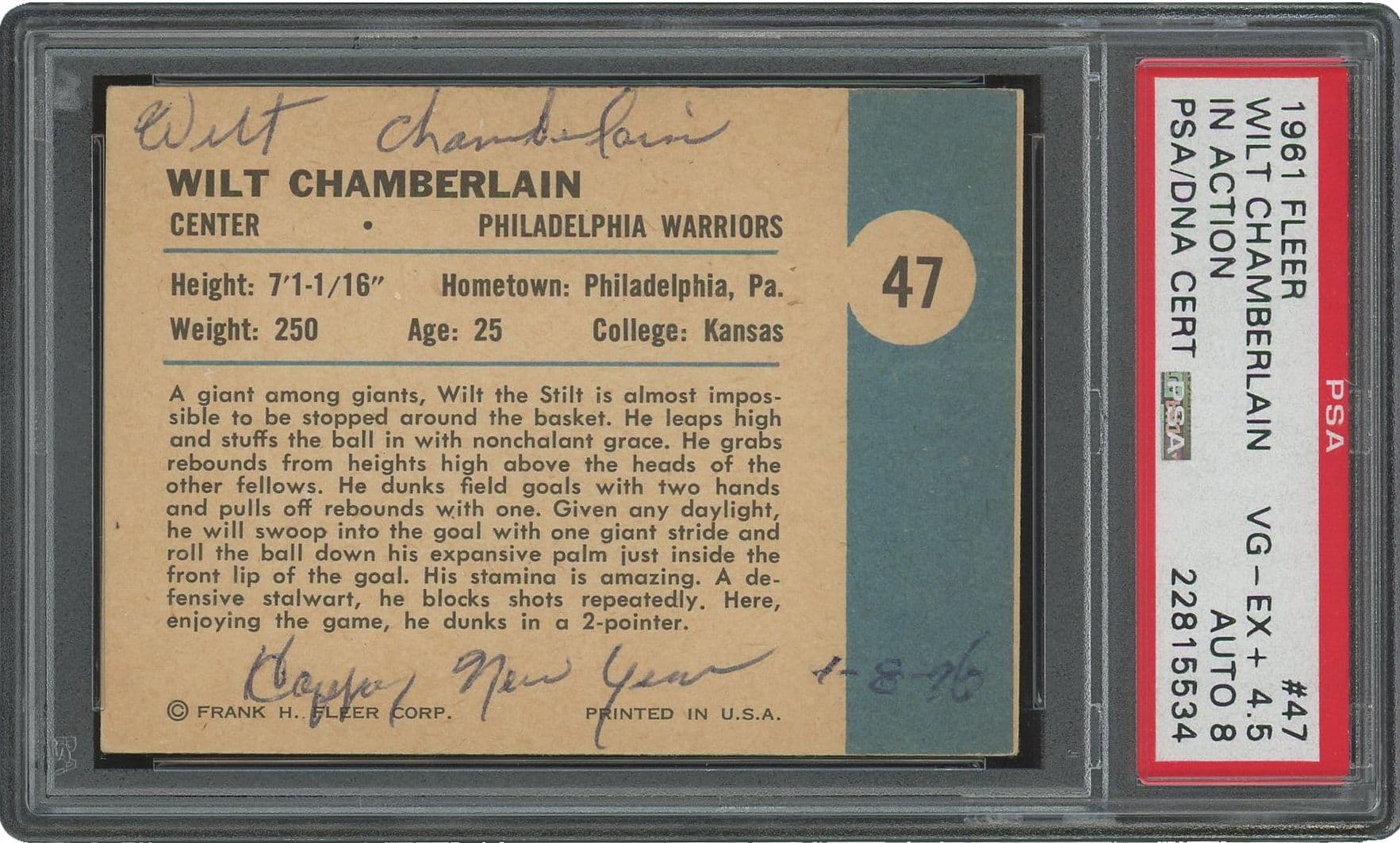
Reference image—shown card: Back-signed 1961-62 Fleer Wilt Chamberlain In Action #47
The card to evaluate for Wilt Chamberlain's Grail Lane is Signed 1961-62 Fleer Wilt Chamberlain In Action #47. Keep the decision tied to exact-card demand, condition, provenance, and price discipline.
Buying caution
This is an aftermarket lifetime autograph, not a pack-issued card. Require dual authentication and provenance, inspect ink placement and fading, and do not pay grail money for a generic slab or a vague COA.
Trophy Lane$50,000+Signed 1961-62 Fleer Wilt Chamberlain Rookie #8
Signed 1961-62 Fleer Wilt Chamberlain Rookie #8
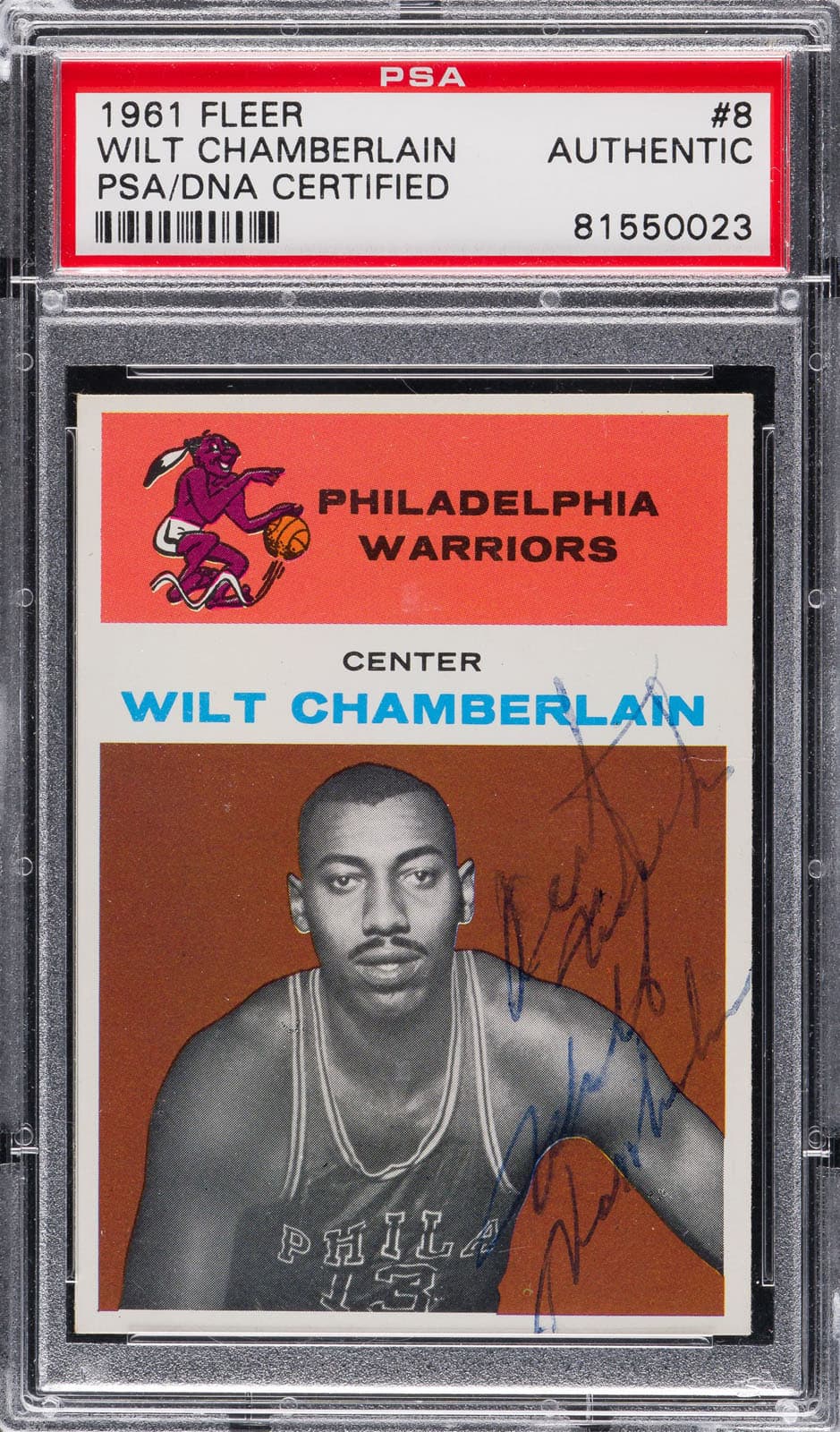
Shown copy: Signed 1961-62 Fleer Wilt Chamberlain Rookie #8
Use Signed 1961-62 Fleer Wilt Chamberlain Rookie #8 for Wilt Chamberlain's Trophy lane because the exact card remains obtainable enough to evaluate. Confirm copy quality, provenance, and realistic exit demand.
Buying caution
Signed Wilt rookies are exceptionally thin and vary enormously. Verify the exact card and autograph certifications, provenance, ink quality, alterations, and card-front eye appeal; price discovery is more honest than a broad guide value.
Keep going
Related tools and coverage
Wilt Chamberlain sales
Compare completed sales for this player's cards.
Wilt Chamberlain articles and analysis
Read recent sales coverage and card research.
Open all-time sales board
Use the all-time board to compare Wilt's vintage condition rarity against modern trophy-card sales.
Open all-time set rankings
See why 1961 Fleer remains one of the strongest vintage basketball sets ever printed.