
Vintage style icon with underrated Knicks collector appeal
Walt Frazier Card Profile
BCI Collector Score
7.4/10
Selective Buy
Overall scoring rubric
Every player uses the same six weighted pillars. The career-evidence adjustment scales only the score above a neutral 5.0, so an unfinished résumé cannot receive the same confidence as a closed career.
- Weighted pillar score
- 7.4
- Closed career
- 100% confidence
- Career-evidence adjustment
- 0.0
- Final BCI score
- 7.4
View all 6 pillar inputs plus Career rule
Pillar inputs
- Stature (25%)
- 8.3
- Cards (20%)
- 7.0
- Demand (20%)
- 6.5
- Durability (15%)
- 8.2
- Liquidity (10%)
- 6.5
- Price (10%)
- 7.5
Career rule
- Career-evidence adjustment
- 0.0
1969 Topps rookie plus Knicks-title and cultural cachet
Frazier's market is stronger than a generic vintage guard profile because the Knicks identity, style, and nickname all add real collector memory. The catalog is still concentrated, but the best cards have more personality than many peers from the same era.
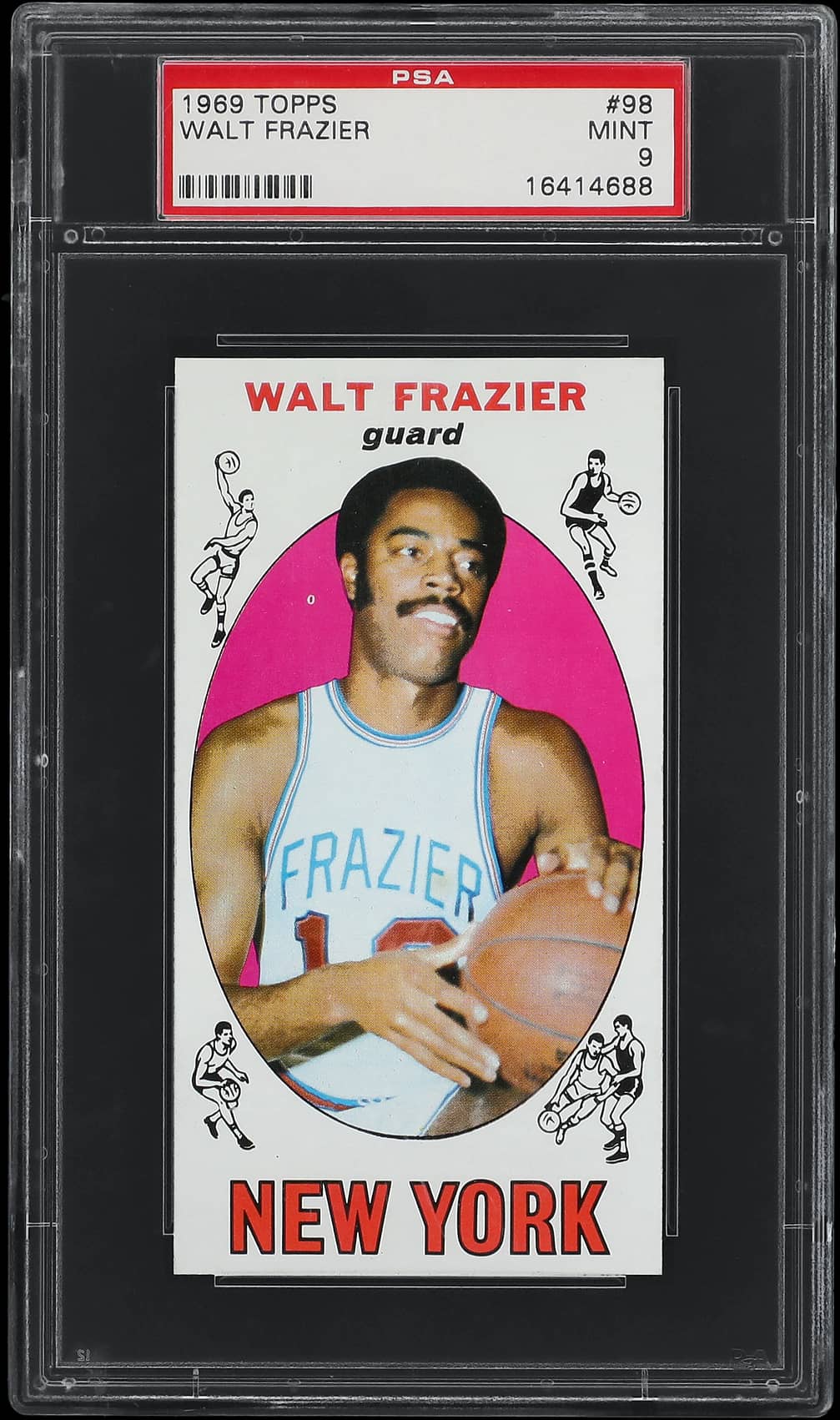
- Entry Lane
- 1969-70 Topps Walt Frazier Rookie #98
- Core Lane
- 1969-70 Topps Walt Frazier Rookie #98 in the best eye-appeal-for-grade copy available inside the band
- Premium Lane
- 1969-70 Topps Walt Frazier Rookie #98
Collector buy plan
What to buy—and why
Walt Frazier's plan names one primary card for each collector role and price band.
Entry Lane$500 and below1969-70 Topps Walt Frazier Rookie #98
1969-70 Topps Walt Frazier Rookie #98
Shown copy: 1969-70 Topps Walt Frazier Rookie #98
The card to evaluate for Walt Frazier's Entry Lane is 1969-70 Topps Walt Frazier Rookie #98. Keep the decision tied to exact-card demand, condition, provenance, and price discipline.
Buying caution
Do not let the grade number do all the work. Vintage buyers punish ugly centering and stained borders even when the flip looks acceptable.
Core Lane$500 to $2,5001969-70 Topps Walt Frazier Rookie #98 in the best eye-appeal-for-grade copy available inside the band
1969-70 Topps Walt Frazier Rookie #98 in the best eye-appeal-for-grade copy available inside the band
Reference image—shown card: 1969-70 Topps Walt Frazier Rookie #98
Use 1969-70 Topps Walt Frazier Rookie #98 in the best eye-appeal-for-grade copy available inside the band for Walt Frazier's Core Lane. Confirm the exact issue and copy quality, then compare repeatable sales before committing capital.
Buying caution
Do not stretch for a higher technical grade if the copy has tilt, surface snow, print marks, or a dead front.
Premium Lane$2,500 to $10,0001969-70 Topps Walt Frazier Rookie #98
1969-70 Topps Walt Frazier Rookie #98
Shown copy: 1969-70 Topps Walt Frazier Rookie #98
The card to evaluate for Walt Frazier's Premium Lane is 1969-70 Topps Walt Frazier Rookie #98. Keep the decision tied to exact-card demand, condition, provenance, and price discipline.
Buying caution
The trap is paying premium money for a copy that is only scarce on paper. Eye appeal has to be the reason.
Grail Lane$10,000 to $50,0001969-70 Topps Walt Frazier Rookie #98
1969-70 Topps Walt Frazier Rookie #98
Shown copy: 1969-70 Topps Walt Frazier Rookie #98
The card to evaluate for Walt Frazier's Grail Lane is 1969-70 Topps Walt Frazier Rookie #98. Keep the decision tied to exact-card demand, condition, provenance, and price discipline.
Buying caution
Do not pay grail money for a vintage card with merely average eye appeal. At this level, the copy is the thesis.
Trophy Lane$50,000+1969-70 Topps Walt Frazier Rookie #98
1969-70 Topps Walt Frazier Rookie #98
Shown copy: 1969-70 Topps Walt Frazier Rookie #98
Walt Frazier's attainable Trophy choice is 1969-70 Topps Walt Frazier Rookie #98. Verify the exact issue and condition, then keep a margin of safety for a thin and selective buyer pool.
Buying caution
Do not treat every expensive vintage copy as a trophy. Trophy status requires condition scarcity, presentation, and a card the hobby already agrees matters.
Collector traps to avoid
- Do not pretend Frazier has a broad modern-style catalog.
- Do not overpay for generic vintage commons just because the player is a Hall of Famer.
- Do not ignore presentation quality in a concentrated vintage market.
Frazier's market fools people when the Knicks identity gets spread across too many ordinary vintage cards. The sharper move is usually a clean rookie or a truly charismatic early Knicks-era piece.