
1990s Hall-of-Fame guard with real but selective collector respect
Gary Payton Card Profile
BCI Collector Score
7.3/10
Selective Buy
Overall scoring rubric
Every player uses the same six weighted pillars. The career-evidence adjustment scales only the score above a neutral 5.0, so an unfinished résumé cannot receive the same confidence as a closed career.
- Weighted pillar score
- 7.3
- Closed career
- 100% confidence
- Career-evidence adjustment
- 0.0
- Final BCI score
- 7.3
View all 6 pillar inputs plus Career rule
Pillar inputs
- Stature (25%)
- 8.0
- Cards (20%)
- 7.5
- Demand (20%)
- 6.7
- Durability (15%)
- 7.0
- Liquidity (10%)
- 7.1
- Price (10%)
- 7.5
Career rule
- Career-evidence adjustment
- 0.0
1990 rookie stack plus 1990s insert and Sonics-era nostalgia
Payton is a strong fit for player profiles because the market is better than the casual hobby memory suggests. The rookie lane is workable, the 1990s insert ecosystem helps, and the Sonics identity gives the best cards enough character to matter.
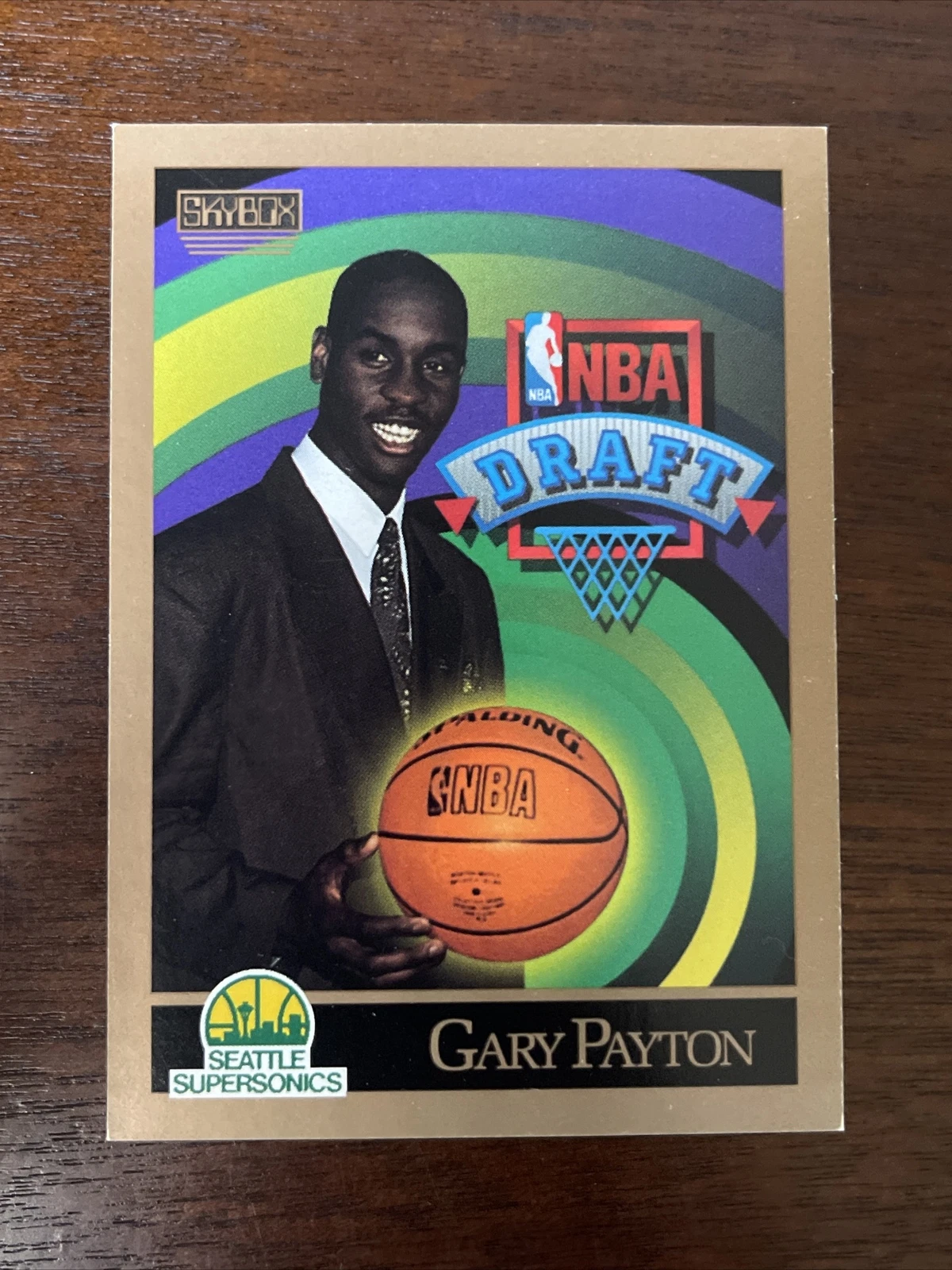
- Entry Lane
- 1990-91 SkyBox Gary Payton Rookie #365
- Core Lane
- 1990-91 SkyBox Gary Payton Rookie #365
- Premium Lane
- 1990-91 SkyBox Gary Payton Rookie #365
Collector buy plan
What to buy—and why
Gary Payton's plan names one primary card for each collector role and price band.
Entry Lane$500 and below1990-91 SkyBox Gary Payton Rookie #365
1990-91 SkyBox Gary Payton Rookie #365
Shown copy: 1990-91 SkyBox Gary Payton Rookie #365
1990-91 SkyBox Gary Payton Rookie #365 is the supported Entry Lane choice for Gary Payton. Buy only when the card itself—not a grade label or isolated asking price—supports the step up.
Buying caution
Do not pay scarcity prices for mass-produced cardboard. The copy has to win on eye appeal, grade, or set identity.
Core Lane$500 to $2,5001990-91 SkyBox Gary Payton Rookie #365
1990-91 SkyBox Gary Payton Rookie #365
Shown copy: 1990-91 SkyBox Gary Payton Rookie #365
1990-91 SkyBox Gary Payton Rookie #365 is Gary Payton's core reference point. Because the era is supply-heavy, centering, surface, and recognizable set identity must justify any premium.
Buying caution
Avoid paying up for a label when the underlying card comes from a high-supply era and does not present above average.
Premium Lane$2,500 to $10,0001990-91 SkyBox Gary Payton Rookie #365
1990-91 SkyBox Gary Payton Rookie #365
Shown copy: 1990-91 SkyBox Gary Payton Rookie #365
1990-91 SkyBox Gary Payton Rookie #365 is the supported Premium Lane choice for Gary Payton. Buy only when the card itself—not a grade label or isolated asking price—supports the step up.
Buying caution
The trap is buying early-1990s nostalgia at premium prices without enough scarcity or condition rarity behind it.
Grail Lane$10,000 to $50,0001997-98 Metal Universe Precious Metal Gems Red Gary Payton /100
1997-98 Metal Universe Precious Metal Gems Red Gary Payton /100
Reference image—shown card: 1990-91 SkyBox Gary Payton Rookie #365
1997-98 Metal Universe Precious Metal Gems Red Gary Payton /100 is the supported Grail Lane choice for Gary Payton. Buy only when the card itself—not a grade label or isolated asking price—supports the step up.
Buying caution
Do not let the era's visual flash replace hierarchy. Expensive 1990s cards still need a deep buyer pool.
Trophy Lane$50,000+1997-98 Metal Universe Precious Metal Gems Green Gary Payton /10
1997-98 Metal Universe Precious Metal Gems Green Gary Payton /10
Reference image—shown card: 1990-91 SkyBox Gary Payton Rookie #365
Use 1997-98 Metal Universe Precious Metal Gems Green Gary Payton /10 for Gary Payton's Trophy lane because the exact card remains obtainable enough to evaluate. Confirm copy quality, provenance, and realistic exit demand.
Buying caution
Do not pay trophy money for an early-1990s card that is merely scarce relative to its base set.
Collector traps to avoid
- Do not overrate the plain 1990 rookie stack just because it is early.
- Do not pay top-guard premiums outside the strongest 1990s insert lanes.
- Do not ignore how much the Sonics visual identity helps the best cards.
Payton's market fools people because the resume invites overconfidence in ordinary rookie cards. The sharper angle is usually 1990s insert quality, not just owning one more Hall-of-Fame rookie.